
Every Freida McFadden Book I’ve Read, Ranked
Every Freida McFadden Book I've Read, Ranked
If you have spent any time on BookTok or in a thriller reading community online, you already know the name Freida McFadden. And if you somehow don’t, consider this your introduction and your warning because once you start, you are not going to stop. Some of the links below are affiliate links, which means if you purchase through them I may earn a small commission at no extra cost to you. I only link to books I have actually read and have opinions about.
Before we get into the ranking, let me tell you a little bit about who we are dealing with here. Freida McFadden is a #1 New York Times bestselling author and a practicing physician specializing in traumatic brain injury. If that combination does not already have you intrigued, I genuinely do not know what will. She writes under a pen name to protect her privacy as a doctor, which honestly makes her even more fascinating to me. She has written over 30 psychological thrillers, her novels have been translated into more than 45 languages, and The Housemaid was adapted into a major film in 2025. She is the real deal, and the body of work she has put together is honestly impressive.
Now, I do want to pause here and say something that has been sitting with me as a Black woman and a thriller lover. I would love to see more Black women authors celebrated in this space. We have some incredible ones emerging like Shanora Williams, Angela Henry, and L.S. Stratton, and I want to see that list grow. Beyond that, the thriller genre as a whole could use more diversity across the board. More voices, more perspectives, more stories. That is not something I am putting entirely on Freida because what she knows is what she knows, and honestly there is something powerful about our stories being told by our own people rather than waiting for someone else to include us. But as a reader I notice the gap and I am always rooting for more representation in the space.
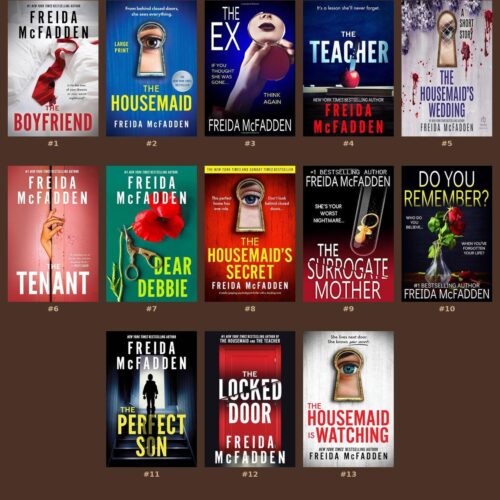
I have read 13 of Freida’s books at this point and it felt like time to put my thoughts somewhere official. Keep in mind this is MY ranking. You might read this and completely disagree and that is perfectly fine. These are my feelings, my memories, and my honest reactions to each book. Some of you might be like, she put WHAT where? And that is exactly the kind of conversation I want to have!
Note: Some links in this post are affiliate links. If you purchase through them I may earn a small commission at no extra cost to you. I only link to books I have actually read and have opinions about.
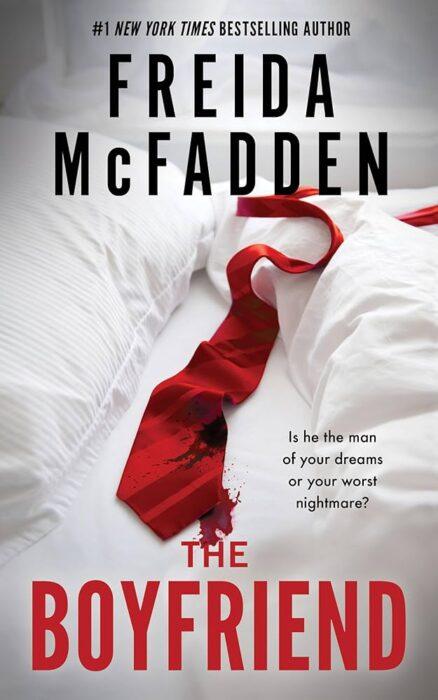
#1 — The Boyfriend
The Boyfriend follows Sydney, a woman with terrible luck in dating who finally thinks she has found someone worth keeping. Her new boyfriend Tom seems perfect on paper. But as small unsettling things start to stack up, Sydney begins to wonder if she is the one in danger or if history is about to repeat itself in the worst possible way.
I went into this book fully convinced I already knew what was happening. I had my suspect locked in from early on, I was reading with that smug energy of someone who thinks they have already figured it out. And then Freida McFadden completely humbled me. I did not see the ending coming at all and that almost never happens to me with her books. What made this one stand out beyond the twist is the premise itself. A serial killer storyline woven into a dating thriller is such a smart combination and it kept me locked in from start to finish. This one is my number one for a reason.
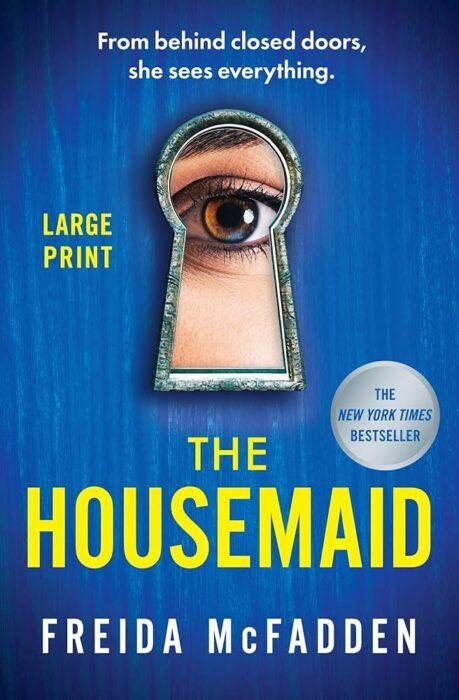
#2 — The Housemaid
The Housemaid introduces us to Millie, a woman with a complicated past who takes a job as a live-in housekeeper for the wealthy Winchester family. What starts as a fresh start quickly turns into something much darker as Millie realizes the picture-perfect family she is working for is hiding some very disturbing secrets behind closed doors.
Yes, this is the cliche pick. Yes, everyone loves The Housemaid. Yes, they made it into a movie and the casting had me ready. But here is why it earns the number two spot for me. The tension in this book is slow burning and strange. Not a lot is happening on the surface but there is just enough weird energy to keep you uncomfortable the entire time. And then when the story shifts and things start rolling, it hits. It reminded me a lot of The Last Mrs. Parrish by Liz Constantine, which I have also reviewed here on the blog and which happens to be another one of my all time favorite thrillers. If you loved that one, The Housemaid is essential.
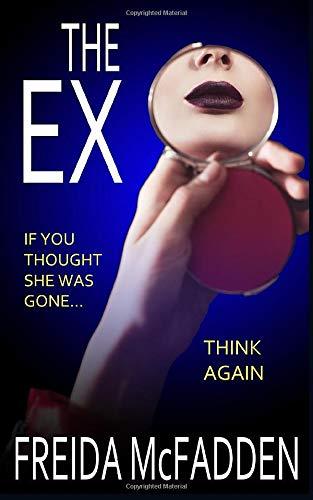
#3 — The Ex
The Ex follows Cassie, a woman who thinks she has finally found the perfect man in Joel, a charming doctor. She knows about his ex-girlfriend Francesca, the beautiful and beloved chef that everyone assumed Joel would end up with. But Cassie is not worried because Francesca is out of the picture. Or is she?
I was semi confused for a good portion of this book and I mean that as a compliment. The kind of confused where you keep turning pages because you need things to make sense. And then everything comes to a head at the end and it all clicks into place in a way I genuinely did not see coming. The twist felt original and earned rather than forced, and that is rare enough to be worth celebrating. This one flew under the radar for me going in and ended up being one of my favorites.
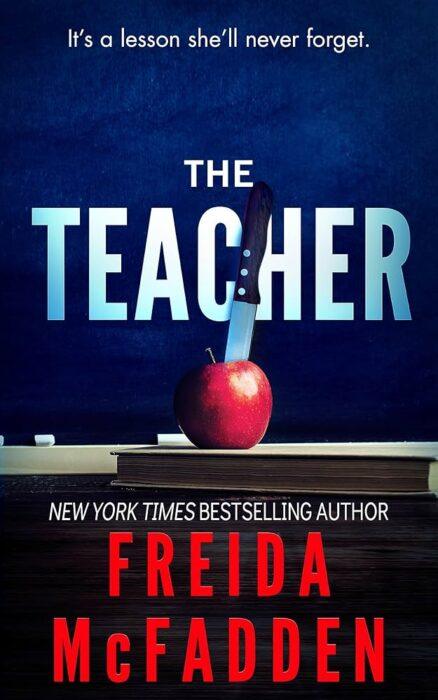
#4 — The Teacher
The Teacher is set at Caseham High School and told from two perspectives. Eve is a math teacher who seems to have a good life with her husband Nate, who also teaches at the school. Then there is Addie, a student who has been ostracized since last year when a scandal involving a teacher-student relationship got a teacher fired. Addie swears nothing happened. Eve is not so sure. And as their stories collide, it becomes clear that neither woman is who she appears to be.
Full disclosure, I used to be a teacher so I came into this one with a personal investment. I want to flag for readers that the teacher-student relationship element is present in this book. Nothing explicit because Freida keeps her thrillers relatively family friendly in that regard, but it is there and worth knowing going in if that is something that affects your reading experience. That said, the twist in this one is genuinely wild and the ending had me sitting with my mouth open a little. I remembered finishing it and thinking, wow, that was really something. Loved this one.
Update: Even better news, while researching for this blog post I saw that Apple is developing this one into a movie! I’m super excited for this one friends!
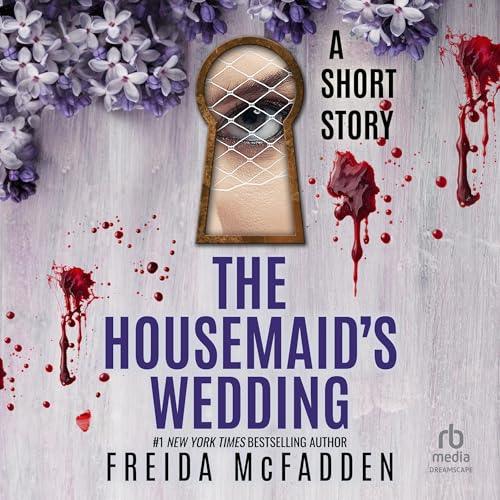
#5 — The Housemaid’s Wedding
The Housemaid’s Wedding is a short story that follows Millie and Enzo as they prepare for their wedding. It gives readers a look into Millie’s past and the life she is finally building for herself after everything she has been through.
I do not usually gravitate toward novellas but I knew I needed to read this one before diving into the final Housemaid book and I am glad I did. It is a short read but it gave me everything I wanted as a fan of Millie’s journey. Getting that peek into her history and seeing her in a moment of genuine joy made this feel like a satisfying pause in the series. A great quick read for anyone who is invested in the characters.
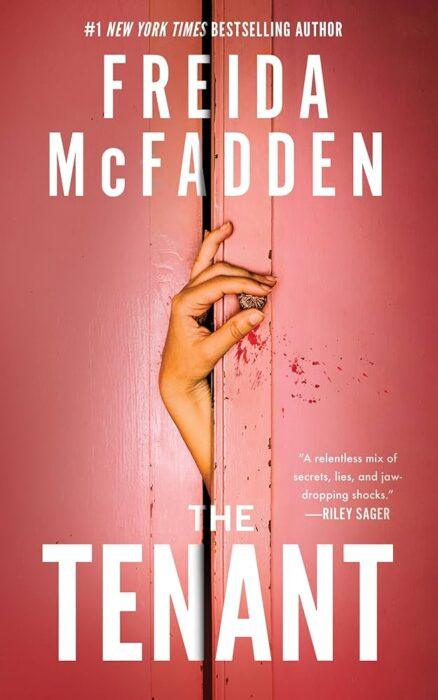
#6 — The Tenant
The Tenant follows Blake, a man who loses his VP job and can no longer keep up with the mortgage on the townhouse he shares with his fiancée Krista. Desperate to make ends meet, they take on a tenant named Whitney. She seems perfect at first, or is she?
I figured out the twist toward the end of this one but honestly it did not matter because I enjoyed every single minute of getting there. This is a solid, well-paced thriller that does exactly what it promises. I actually think this one would translate beautifully as a streaming movie. It has that contained, claustrophobic energy that works really well on screen. One of her newer releases and a strong one.
Update: A little birdie (my research lol) has told me that Amazon MGM studios bought the rights for this one, we might see this adaptation soon!
#7 — Dear Debbie
Dear Debbie follows Debbie Mullen, an advice columnist who has spent years listening to women describe bad marriages and difficult situations and offering them guidance. When Debbie decides to take matters into her own hands in a very direct way, the story takes a sharp and satisfying turn.
I actually wrote a full review of this one on the blog so make sure you check that out here. What I will say here is that this book surprised me. It has a dark humor running through it that I did not expect to work in a thriller and I honestly thought I would not like it. I like my thrillers serious. But the humor fit the premise perfectly and it never undercut the tension. This is also one of the first Freida books where you know from the beginning that the main character is not exactly innocent, and yet you understand every single decision she makes and you are rooting for her the whole way through. The ending was satisfying in the best way.
Update: Great news on this one, we will be getting this adaptation soon with Amazon MGM Studios! Read about it here.
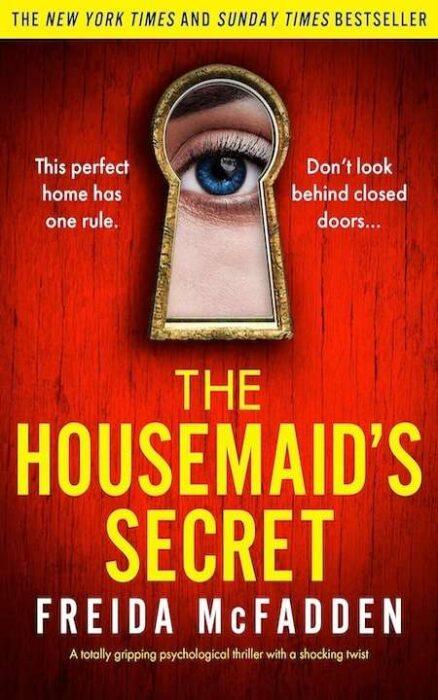
#8 — The Housemaid’s Secret
The Housemaid’s Secret picks up after the events of the first book with Millie now working as a cleaning woman. When she starts to suspect that one of her wealthy clients, a woman named Wendy, is being abused by her husband Douglas, she decides to intervene and help her escape. But nothing about this situation is what it appears to be, and Millie quickly realizes she has walked into something far more dangerous than she bargained for.
Honestly, I think this one suffered for me because the first Housemaid book set such a high bar that I kept holding it up for comparison and that is not entirely fair. On its own it is a good read with a solid premise and an adequate twist. It just did not leave me with that same feeling that book one did. This might actually be one I revisit on a reread because I have a feeling my opinion could shift when I am not measuring it against the original. We will see.
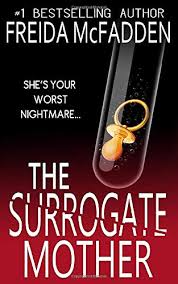
#9 — The Surrogate Mother
The Surrogate Mother follows Abby, a woman desperate for a baby after years of failed fertility treatments and a fallen-through adoption. When her personal assistant Monica offers to be her surrogate, Abby thinks her dream is finally coming true. But as the pregnancy progresses, Abby starts uncovering disturbing truths about Monica and realizes that nothing about this arrangement is what it seemed.
This one had a great premise and solid writing and it moves at a good pace. It is the kind of book that works perfectly as a quick Sunday afternoon read when you want something engaging but not necessarily life changing. Not every thriller needs to leave you wrecked and this one delivers exactly what it sets out to do. A good book, just not one that stuck with me the way some of her others did.
Update: Wow Freida is really out here killing it! Another proposed adaption from Sony!
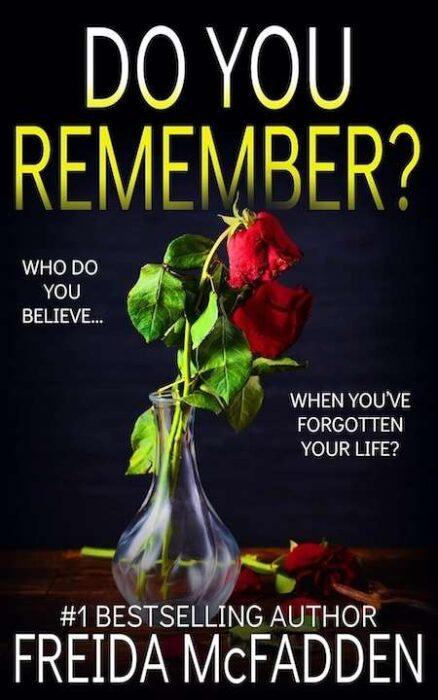
#10 — Do You Remember
Do You Remember follows Tess, a woman who wakes up unable to recognize her own face, her home, or the man who claims to be her husband. A letter written in her own handwriting tries to explain the situation but when a text shows up warning her not to trust the man she is supposed to love, everything begins to fall apart.
My partner and I have actually had debates about this one, which tells you it sparks something worth talking about. Here is my honest take. The people around Tess are deeply untrustworthy and that tension kept me reading. But I was genuinely upset when the twist turned out to be what it was because I felt like it could have been something more thrilling. I am historically not a fan of the memory loss or groundhog style of storytelling, with the exception of the Hulu movie Palm Springs which is just excellent, and I found myself getting a little bored in the middle. That said I appreciated the ending for what it was and I understand why a lot of people love this one. Not every ranking is going to land the same for every reader.
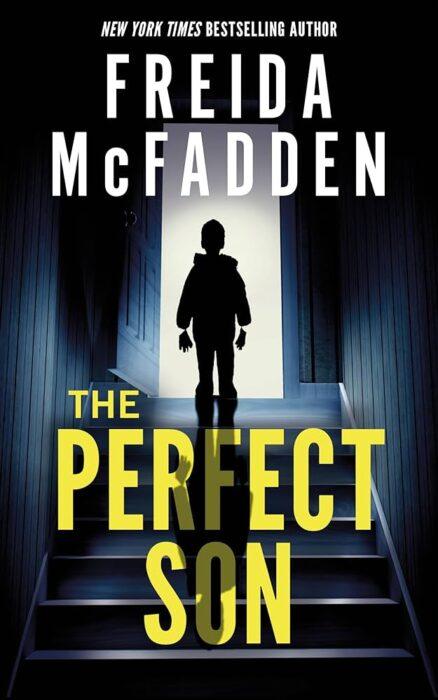
#11 — The Perfect Son
The Perfect Son follows Erika, a mother who has always believed her son Liam is exactly what the title says. When a girl Liam was seeing goes missing and the police show up at her door, Erika is forced to consider a possibility she has been refusing to look at directly.
This is a lifetime movie in book form and I mean that with full affection. It is your classic, well-constructed domestic thriller with a premise you have seen variations of before. What makes it interesting to me personally is that this was actually the first Freida McFadden book I ever read and it is what sent me down the rabbit hole of reading everything else she has written. It is a great starting point if you are new to her work and want to ease into the style before hitting her best stuff.
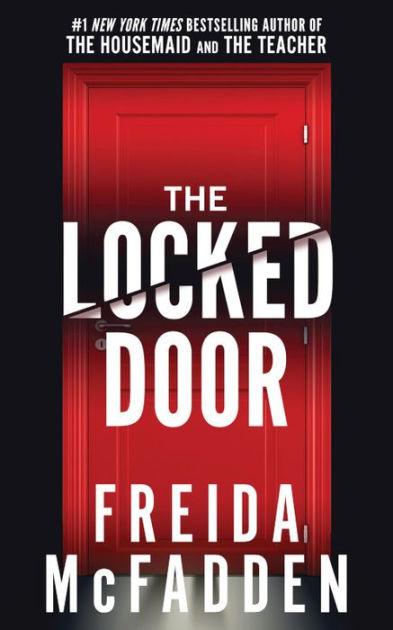
#12 — The Locked Door
The Locked Door follows Nora, a surgeon who has spent her entire adult life trying to outrun her past. When she was eleven years old her father was arrested for being a serial killer. Decades later she has built a quiet, controlled life and nobody knows who her father is. Then one of her patients is murdered in the exact same manner her father used to kill his victims. Somebody knows who Nora is. And somebody wants her to take the fall.
I went into this one with high expectations based on the premise and came out feeling like it did not quite deliver what I was hoping for. I liked that Nora is sharp and self-aware, which made her easy to read. There was a twist that I thought was cool. But I genuinely struggled to locate where the thrill was for most of this book. It just did not connect with me the way I wanted it to. Not a bad book at all, just not the book for me.
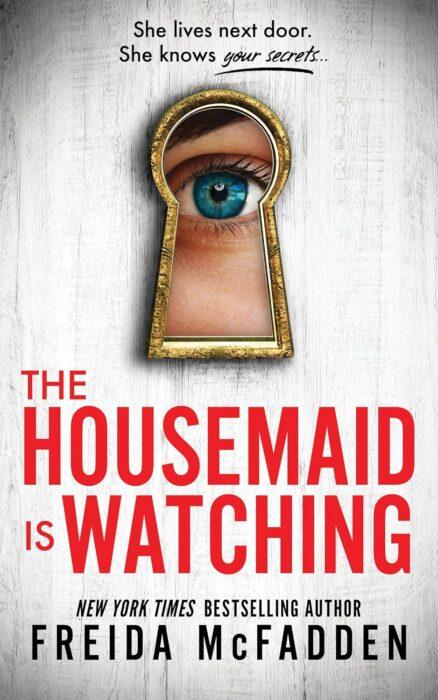
#13 — The Housemaid Is Watching
The Housemaid Is Watching is the final installment in the Housemaid series. Millie and Enzo are now settled into suburban life with their family, but strange and unsettling things start happening in their new neighborhood. The threat this time feels closer to home than ever before.
Out of every Freida McFadden book I have read, this one landed at the bottom for me. I finished the series because I love Millie and Enzo and I genuinely wanted to see their story through. And there are moments in this book that I appreciated, particularly anything centered on their family dynamic. But the thriller itself felt rushed and underdeveloped to me. The tension was built more on memory and perception than on concrete events, which made it feel less grounded than her other work. I also want to flag that this book touches on child abuse, which some readers may want to know going in. It was an okay read but as a series finale it did not hit the way I hoped it would.
Where Should You Start?
Here is my genuine recommendation: do not feel pressured to read in order or to start at the top of my list. Start somewhere in the middle or toward the bottom and work your way up. Let yourself build up to the best ones. There are no rules here. We are all just out here reading and having a good time. Pick whichever premise sounds most interesting to you and go from there.
As for me, I still have a few of her books left to get to and I am thinking about making my way through the ones I have not read yet. I have also been giving other women authors a try lately and I am loving expanding my reading list beyond one author.
Interested in reading more Ashley Jane Lit Reads? Try this book review about Do What Your Godmother Says by L.S. Stratton! Definitely a good thriller!
